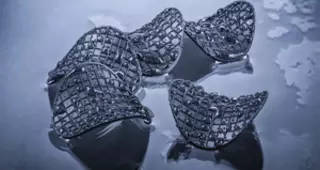
Tracer™ offers advanced moving bed biofilm reactor solutions. This aerobic wastewater treatment process uses biofilm carriers to efficiently treat contaminants and complex compounds in wastewater and industrial effluents.
Overview
To tackle the global issue of emerging contaminants and complex compounds, heavy industries are required to meet tough regulations that mandate higher levels of wastewater treatment before discharge.
Tracer by AnoxKaldnes® — a subsidiary of Veolia Water Technologies — is a range of specialized moving bed biofilm reactors (MBBR) exactly for this purpose. It specializes in the treatment of glycols, cyanides, selenium and other complex compounds to improve the quality of industrial effluent, making it safer for human health and more environmentally friendly.
How does Tracer work?
The MBBR solution is a biological aerobic wastewater treatment process where a microorganism biofilm grows on carriers suspended in wastewater that removes pollutants in a cost-efficient way. It can be used across almost all industrial market sectors including mining, pharmaceutical, oil and gas, pulp and paper and general heavy industry.
The specialized carriers of the MBBR aerobic wastewater treatment process create a large protected surface on which the biofilm layer of microorganisms can attach and be supported. As the biofilm carriers move within the moving bed biofilm reactor, the large surface area provides greater treatment capacity in a smaller volume than conventional treatment methods.
This facilitates engineered, controlled biofilm growth for challenging applications in industrial facilities, where high stability during the wastewater treatment process is a priority.
Most industrial complex compounds require several steps to break down and the range of Tracer moving bed biofilm reactor technologies are well suited for this. It is flexible enough to be used in upstream and downstream processes and easily retrofitted into existing infrastructure. Multiple reactors can be used to allow the use of different bacteria types to break down these complex compounds.
Features and benefits
Operational efficiency
- Low to no maintenance is required
- Low sludge production
Environmental performance
- Low nutrient discharge
- Enhanced nitrification
Adaptability and flexibility
- Robust and stable in the face of changing conditions
- Flexible to upstream and downstream processes
- Easily upgraded for future loads
Space and integration
- Smaller footprint compared to other biological treatment systems
- Easy to retrofit into existing infrastructure.
Applications
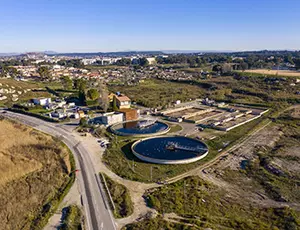
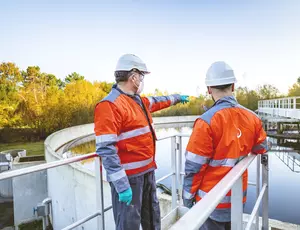
Services

Product range and Resources
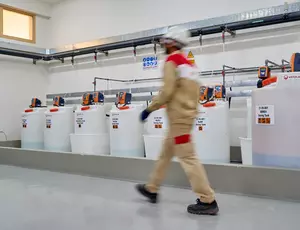
Part of the Tracer range, these technologies provide moving bed biofilm reactor treatment technology for specific contaminants in wastewater.
- Tracer™ Glycols
Used in applications focusing on anti-freeze and de-icing agents and solvents.
- Tracer™ Cyanides
Applied to mining and industries that manufacture paints, polymers, organic compounds and pharmaceuticals.
- Tracer™ Selenium
Applied for coal and mineral mining, coal-based power generation, oil extraction and petrochemical refining, metallurgy, and agricultural irrigation.
Contact
Industries face stringent regulations in response to the global challenge of emerging contaminants and so they must act accordingly. Wastewater treatment is paramount and Tracer’s ability to tackle these complex compounds means our customers can meet the demands of our more environmentally conscious world.
Maria Ekenberg
Industrial process specialist, AnoxKaldnes
Contact Maria through her LinkedIn account
FAQ about Tracer™
Aerobic wastewater treatment is a biological process that uses oxygen to break down organic pollutants in wastewater and industrial effluents. This method relies on the activity of aerobic microorganisms, primarily bacteria, that thrive in the presence of oxygen. These microorganisms metabolize and consume organic matter, converting it into carbon dioxide, water, and biomass.
A microorganism or a microbe, is a microscopic organism such as bacteria and fungi. Microorganisms are diverse and can be found in almost every environment on Earth, from the depths of the ocean to the soil, and even within the bodies of other organisms.
Microorganisms are fundamental to life on Earth, as they play vital roles in nutrient cycling, decomposition, and various ecological processes. Microorganisms are also used in industrial wastewater treatment processes to break down organic waste and treat other contaminants.
A biofilm is a group of microorganisms growing together on a surface.
An MBBR is a biological wastewater treatment process where biofilm grows on carriers suspended in the wastewater. The system removes pollutants compactly and robustly.
Case study

Heathrow Airport's winter aircraft "de-icing", while crucial for safety, poses potential risks to the River Crane ecosystem. Our innovative Tracer™ Glycols plant, featuring AnoxKaldnes™ Moving Bed Biological Reactors (MBBRs), offers an eco-friendly solution. This system efficiently processes 720,000 liters of runway runoff hourly, removing 5500 kg of biochemical oxygen demand daily. Adapting to seasonal needs, it intensifies operation during winter and conserves resources in warmer months.
This solution is integral to Heathrow's environmental strategy, protecting the River Crane while balancing operational requirements with cutting-edge environmental safeguards. Our nine-year commitment to operating the plant demonstrates long-term dedication to water quality and ecological balance. The facility's expansion potential further showcases Heathrow's proactive approach to environmental stewardship, addressing future challenges in sustainable aviation.