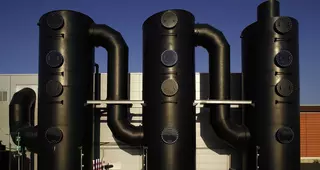
Aquilair Bio is a hybrid process that combines the action of biology and chemistry, enabling the removal of most of the hydrogen sulfide (H2S) present in the exhaust air of a wastewater treatment plant
Overview
By targeting hydrogen sulfide (H2S), the primary culprits behind unpleasant odors, Aquilair Bio offers a comprehensive solution for exhaust air treatment. Its dual-action approach not only ensures highly efficient odor removal but also promotes sustainability by minimizing chemical usage.
Chemical odour control processes are often costly to operate, particularly when the quantity of H2S is significant, generating a high consumption of reagents (bleach and soda) and therefore representing a significant OPEX.
Aquilair Bio efficiently targets and eliminates key odor-causing compounds, particularly H2S but also NH3 due to the acidification of the percolate, commonly found in wastewater treatment plant exhaust air.
Advanced hybrid odor control equipment
It is an efficient, modular, and easy-to-operate solution designed to fit all types of installations, whether new, retrofitted or expanding existing plants, accommodating a wide range of flow rates and suitable for wastewater treatment plants of all sizes. This fully automatic process features active solution recirculation to handle load variations without compromising discharged air quality, consistently achieving over 99% efficiency and maintaining constant discharged air quality.
By integrating these complementary technologies, Aquilair Bio offers a comprehensive and economical solution for managing odors in wastewater treatment facilities, ensuring compliance with air quality standards while minimizing environmental impact.
It is important to note that Aquilair Bio is designed to be a versatile component within a comprehensive odor control strategy. While highly effective, it complements other technologies and solutions in an odor control system. Depending on the specific needs of a facility, Aquilair Bio can be integrated with other proven methods such as traditional Aquilair systems, activated carbon adsorption, or various types of air filters. This flexibility allows plant operators to create a tailored, multi-faceted approach to odor control, addressing a wide range of odorous compounds and varying concentrations. By combining Aquilair Bio with other technologies, wastewater treatment plants can achieve optimal odor reduction while balancing efficiency, cost-effectiveness, and environmental considerations.
How does Aquilair Bio work?
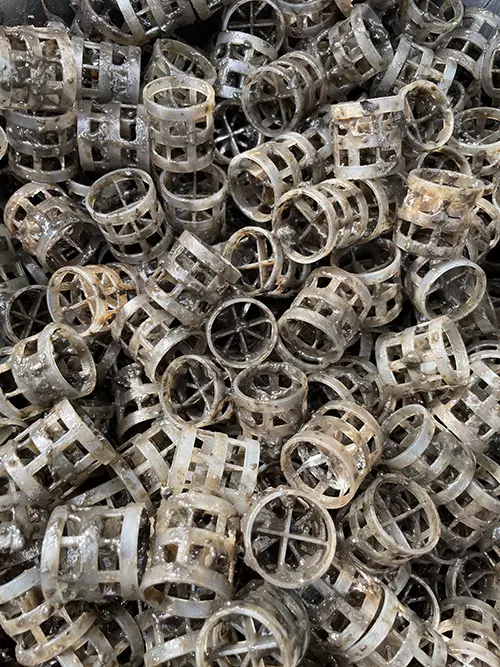
Aquilair Bio is an innovative adaptation of the classic Aquilair™ tower, designed for efficient odor control in wastewater treatment plants. The system utilizes smaller packing and recirculates industrial water, creating an environment for sulpho-oxidizing biomass (SOB) development. This bio-oxidation process converts H₂S to sulfates, operating at a pH below 3.
This operating pH therefore allows treatment of NH3 in addition to H2S.
The system maintains the Aquilair chemical scrubber process while modifying hydrodynamic conditions for optimal performance. It's easily convertible from standard Aquilair systems, offering low operating time and investment.
Aquilair Bio typically consists of one to four chemical scrubbers:
- Acid scrubber (pH 2-3) for nitrogenous compound removal
- Basic scrubbers (pH 9 and 11) with oxidant for sulfide compound elimination
- Neutral pH scrubber with reducing agent to neutralize excess oxidant
This configuration ensures comprehensive odor control, effectively targeting various malodorous compounds in wastewater treatment facilities.
Designed for versatility, Aquilair Bio adapts to various plant sizes and configurations, making it an ideal choice for both new installations and facility upgrades.
Experience the future of odor control with Aquilair Bio – where science meets efficiency to create cleaner, fresher environments.
Features and benefits

Synergistic approach
Combines biological and chemical treatment methods.

Enhanced efficiency
Optimized for removing H2S and NH3.

Cost-effective
Delivers superior odor control at a reduced operational expense.

Versatile application
Ideal for wastewater treatment plant air quality management.

Environmentally friendly
Utilizes natural biological processes alongside targeted chemical treatments.
Applications

Services

Contact
Aquilair Bio is a significant advancement in wastewater odor control, combining biological and chemical processes. This hybrid approach aligns perfectly with our industry's push towards ecological transformation, reducing chemical consumption and operational expenses while maintaining superior air quality. Aquilair Bio exemplifies how innovative engineering can create sustainable solutions for cleaner, more efficient wastewater treatment facilities.

Rémi Monnier
Specialized engineer at Veolia Environnement SA - Business Support and Performance Management Department
Contact Rémi through his LinkedIn account
FAQ about Aquilair bio
Wastewater plant managers can control odor through several exhaust air treatment methods. Biofilters use organic materials like compost, mineral materials like pozzolan or wood chips for biological degradation of odorous compounds, while chemical scrubbers employ solutions for absorption or chemical reactions. Activated carbon filters also effectively adsorb odorous compounds. Many facilities use combined systems with multiple treatment stages, supported by proper ventilation and regular maintenance to ensure optimal performance.
It is crucial to prevent negative impacts on surrounding communities, maintain good public relations and comply with environmental regulations. Strong odors can affect quality of life for nearby residents, lead to complaints and damage the facility's reputation. Additionally, some odorous compounds can be hazardous to worker health and safety, making effective control essential for plant operations.
Aquilair Bio offers a compelling balance of efficiency and cost-effectiveness compared to traditional chemical-only odor control equipment. In terms of capital expenditure (CAPEX), Aquilair Bio is on par with conventional Aquilair processes, making it an attractive option for new installations or upgrades.
Aquilair Bio truly impacts on operational expenditure (OPEX) reduction:
- It completely eliminates the need for sulfuric acid (H2SO4), resulting in a 100% reduction in its consumption.
- Sodium hypochlorite (NaOCl) usage is reduced by approximately 60%.
- Sodium hydroxide (NaOH) consumption is decreased by about 20%.
These significant reductions in chemical usage not only lower operational costs but also minimize the environmental impact of the odor control process. Importantly, Aquilair Bio achieves these savings without compromising on performance, as it maintains similar power consumption levels to traditional Aquilair systems.
Aquilair Bio's maintenance requirements are largely similar to those of the standard Aquilair process, which is beneficial for operators already familiar with Aquilair systems. However, there are some specific areas that require particular attention:
- pH Sensor: Regular calibration and cleaning are crucial to ensure accurate pH control, which is vital for the bio-oxidation process.
- Recirculation flow meter: This needs to be monitored and maintained to ensure optimal flow rates for the biological process.
- Differential pressure sensor: Regular checks are necessary to detect any changes in pressure that might indicate issues within the system.
- Pressure sensor at the recirculation pump discharge: This requires close monitoring as an increase in pressure or a decrease in recirculation flow could indicate clogging of the nozzles.
While these focus areas require attention, they are manageable with a well-planned maintenance schedule. The biological nature of the process doesn't significantly increase maintenance complexity compared to chemical-only systems.
Aquilair Bio demonstrates excellent scalability, making it suitable for wastewater treatment plants of all sizes. The process is highly adaptable and can be configured to meet the specific needs of various facilities:
- For smaller to medium-sized plants, a single Aquilair Bio tower can effectively handle air flows ranging from 2,000 cubic metres per hour (m³/h) to 100,000 m³/h. This wide range allows for precise sizing to match the exact requirements of many wastewater treatment plants.
- For larger facilities or those with higher air flow requirements, multiple Aquilair Bio towers can be installed in parallel. For instance, if the required flow exceeds 100,000 m³/h, two towers can be set up side by side, each handling half of the total flow.
This modular approach not only allows for easy scaling but also provides operational flexibility. Plants can start with a single tower and add more as their needs grow, or they can use multiple towers to ensure redundancy and continuous operation during maintenance periods. The scalability of Aquilair Bio makes it a versatile solution for odor control across the spectrum of wastewater treatment plants sizes and configurations.
Case Studies

Saint-Tropez’s wastewater treatment plant was facing excessive consumption of chemicals for the deodorization of effluents and high risk of elemental sulfur precipitation, resulting in high operating costs and environmental risks. To meet this challenge, Aquilair Bio was implemented and significantly reduced the use of chemicals, particularly acid, bleach and soda, while maintaining high treatment efficiency. The process uses sulpho-oxidizing biomass thus promoting natural treatment processes.