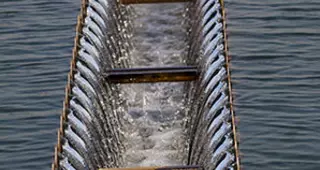
Biostyr® is a compact, simple and innovative Biological Aerated Filter (BAF) technology with a submerged media bed that enables the treatment of pollution from municipal wastewater and industrial wastewater. With its compact structure and reduced environmental footprint, it is suitable for wider sewage treatment and is ideally suited to plants with a limited footprint, within close proximity to neighborhoods or when an expansion is desired. Its standard design and engineering with fully automated operation make it appropriate for both municipal and industrial wastewater treatment applications.
Overview
Biostyr® is a simple and innovative Biological Aerated Filter (BAF) biofilter technology with a submerged media bed that treats pollution from municipal wastewater and industrial wastewater in a compact structure with a reduced environmental footprint.
It helps our customers meet today’s stringent effluent limits and is ideally suited to plants with a limited footprint, within close proximity to neighborhoods or when an expansion is desired.
How Biostyr works?
Biostyr is a compact biofilter technology designed for sewage treatment to eliminate both soluble and particulate pollution, requiring no final clarification process, thereby ensuring a low environmental footprint.
In a single structure, it combines a biological reactor with biofilm to eliminate soluble pollution, including chemical oxygen demand (COD), biochemical oxygen demand (BOD) and nitrogenous (N-NH4 and N-NO3) and a physical filter to store the biomass and stop particulate pollution (total suspended solids (TSS)).
Biostyr is based on the use of a light, floating filling material called Biostyrene™ which consists of polystyrene beads manufactured specifically and sized according to the application. These beads are blocked under the ceiling of the concrete structure (the cell) which is fitted with nozzles that allow the treated water to flow out. The aeration manifold is located in the lower part of the structure and optimizes the contact time between the wastewater and the process air. Historically biomass and suspended solids would accumulate inside the physical filter medium and be regularly removed by periodic backwashes. However, our lightweight material allows the system to be washed by simple gravity expansion of the filter medium using the treated water stored in the upper structure (flushing). This results in less equipment being installed (no wash pump), less maintenance and higher energy efficiency.

Features and benefits
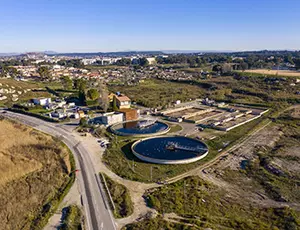
Biostyr is particularly suitable whenever compactness is sought since it can be retrofitted to expand a site’s footprint where there is limited space, such as in tourist and resort areas, and in cities where neighbors are in close proximity. It is also suitable for mountainous areas where, due to the more volatile climates, treatment installations have to be completely protected from bad weather. It is highly tolerant of process variations in load.
It is adaptable for different applications: carbon removal only, carbon removal and ammonia oxidation (nitrification); carbon removal and combined pre-denitrification, nitrification in separate structures; carbon removal and simultaneous nitrification-denitrification; tertiary nitrification, or tertiary denitrification with the addition of a soluble carbon source (i.e. methanol)

Small footprint
Compact process requiring no further clarification

Modular design
Quick response to high load variations.

C, N, Pre-DN, NDN, PostDN

Standard design and engineering
Fully automated operation

Gravity backwash
Higher energy efficiency
Applications
Services


Product range and Resources
Biostyr® Duo
The most compact solution for carbon and nitrogen pollution. It combines AnoxKaldnes™ MBBR and Biostyr® to treat both soluble and particulate pollution. In new facilities, its footprint is significantly smaller. In existing plants, unit capacity can be increased without major modifications.
Contact
With an increased population, many municipalities are facing the dilemma of needing to treat more wastewater but having limited land to build additional treatment facilities. This is compounded further by increasing quality regulations and the need to reduce the carbon footprint of operations. The Biostyr treatment range assures excellent effluent quality in the smallest space in a configuration that can reach almost 100 percent energy self-sufficiency.

Kim Sørensen
Senior Process and Technology Expert
Contact Kim through his LinkedIn page
FAQ about Biostyr®
Biofiltration processes, also known as BAF, combine biological treatment, clarification and filtration into one compact system. The soluble pollution (i.e. carbon, nitrogen) is eliminated by the fixed biomass on growth support media. The effluent going through this media bed also eliminates particulate pollution (total suspended solids (TSS)). Usually built with multiple and parallel filter cells, it allows flexible operational control, based on actual flow and load conditions.
To increase the capacity of your wastewater treatment plant within a limited space, consider implementing a combination of advanced technologies and process optimizations. Start by upgrading to high-rate clarifiers for improved solids removal and installing membrane bioreactors (MBR) for compact biological treatment. Enhance nutrient removal with moving bed biofilm reactors (MBBR) and employ advanced oxidation processes (AOP) for efficient contaminant breakdown. Improve sludge management through anaerobic digestion and implement SCADA systems for real-time monitoring and process optimization. For flexible capacity increases, consider modular expansion units. You can also explore vertical integration of treatment processes to maximize space efficiency. By adopting these innovative solutions, you can significantly boost your plant's treatment capacity without the need for extensive physical expansion, making the most of your limited footprint while meeting increased demand.
The following measures can help ensure effective pollutant treatment to protect public health and the environment:
- Implementing comprehensive influent characterization and monitoring
- Designing multi-stage treatment processes tailored to specific contaminants
- Utilizing primary, secondary and tertiary treatment methods
- Employing advanced oxidation processes (AOP) for recalcitrant pollutants
- Implementing biological nutrient removal (BNR) for nitrogen and phosphorus
- Use of activated carbon adsorption for organic compound removal
- Installing UV disinfection or chlorination systems for pathogen control
- Conducting regular effluent quality testing and monitoring
- Implementing strict operational protocols and staff training programs
- Maintaining compliance with local and national environmental regulations
- Regularly updating treatment technologies to address emerging contaminants
- Development of contingency plans for potential system failures or emergencies
Case Studies
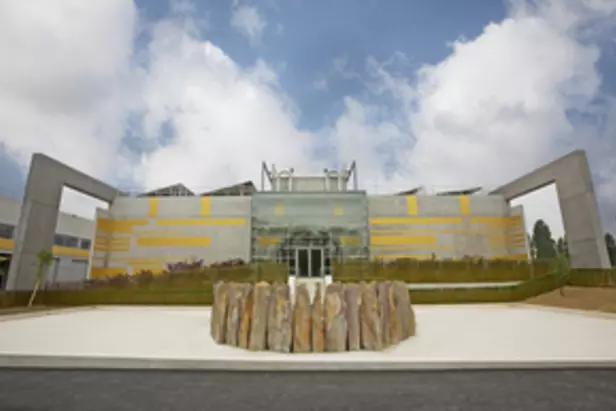
The Seine Aval wastewater treatment plant, Europe's largest, processes 1.5 million m³ daily for 6 million inhabitants. Our subsidiary, OTV, helped the municipality to modernize its biological treatment, making it more compact and environmentally friendly. The facility's upgrade introduces a dual-line system for advanced biological treatment of pollutants:
The biofiltration line, handling 80% of incoming volumes, is composed of 150 Biostyr cells for optimal flexibility. The innovative membrane line treats the remaining 20% using 462,000 m² of ultrafiltration membranes, producing high-quality water without chemical reagents. This dual approach optimizes the quality of the water returned to the Seine while reducing chemical usage and operational costs.
The modernization also dramatically reduced the plant's footprint, with the biological treatment area now occupying just one-fifth of its original space, marking a significant advancement in sustainable water management.